Do
- Keep sentences clear and to the point
- Double-check spelling, job titles, and formal designations
- Stay objective and without bias
- Focus on facts and solutions
- Tell the stories that matter
To build trust with our audience, we must be consistent in both who we are and how we communicate. Like people, brands that behave inconsistently or unpredictably raise alarm bells in the minds of others.
We use brand archetypes to project a consistent and clear representation of who we are. Archetypes are universally understood characters that help anchor our brand’s personality. Defining our archetypes (and staying true to them) keeps us consistent.
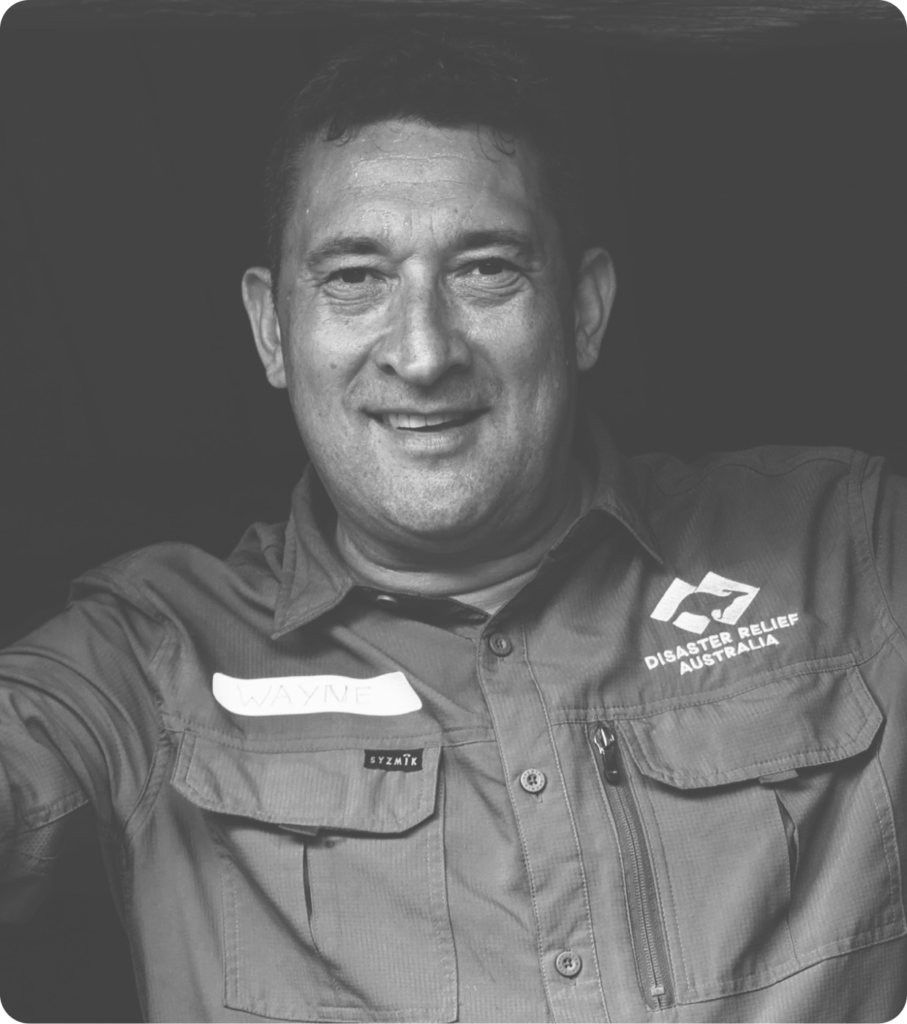
An expert in their field, the Principled Leader uses their knowledge to educate and guide others. Their experience and leadership makes them the go-to figure in times of difficulty, particularly in moments when clarity and direction is most needed.
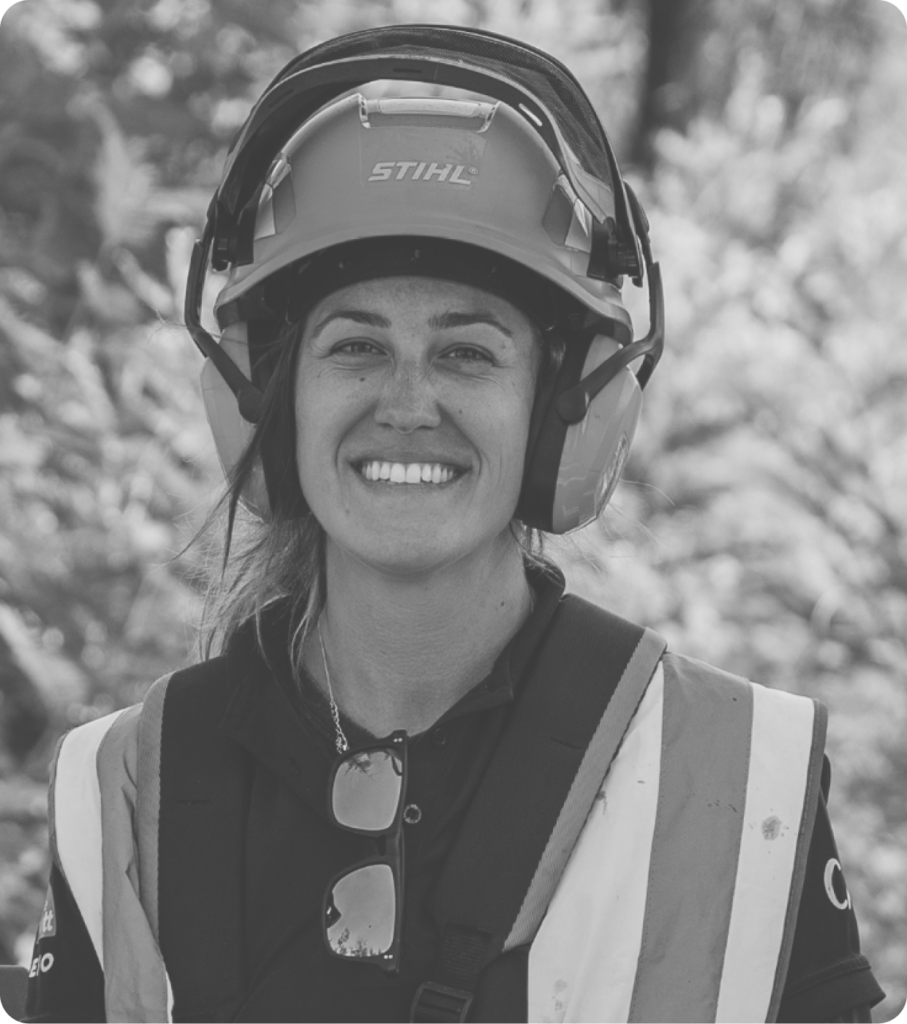
The Change Maker isn’t just leading from the front. They’re out in the field, working alongside others to make a real, tangible difference.
Change Makers aren’t afraid of getting dirty in the pursuit of doing good. They revel in new challenges and welcome fresh experiences. In the eyes of the Change Maker, there’s no task beneath them—if there’s a job that needs doing, they’ll bring their all to get it done.
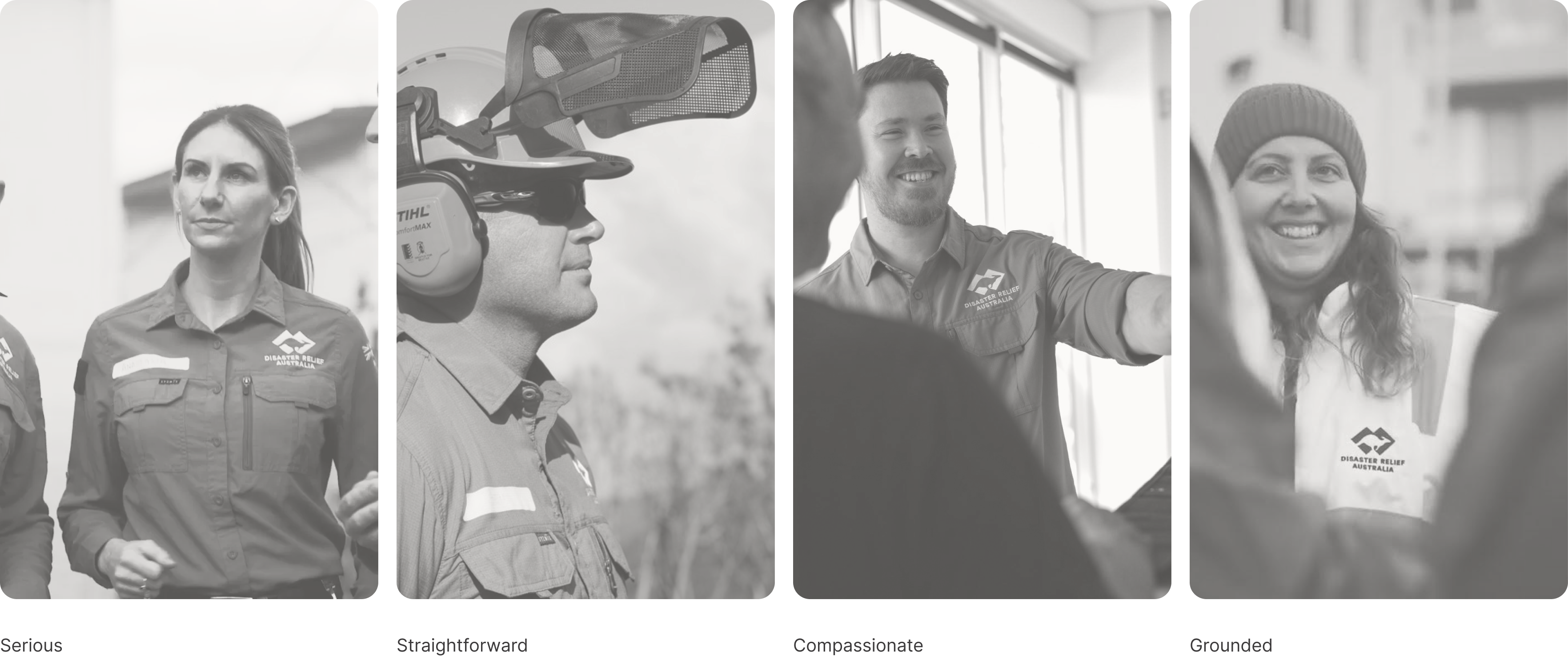
The nature of our work is serious, often the communities and people we serve have experienced life-altering events. Our communication style is sensitive to this. We are deliberate in our language and focused in our messaging, respectful of the weight our words carry.
We don’t sugarcoat complex issues; instead, we address them head-on with the depth they deserve. Drawing on our expertise, we provide information our audience can trust.

Do
Don’t
Sounds like this
For many veterans, DRA is a path of continued service. Here, they find purpose and community.
Not like this
Lots of veterans join DRA to keep busy and give back. They hang out with people who get it and work together towards the same mission.
Our work in disaster recovery is unique, which makes it even more important to prioritise clear communication. We keep things simple and easy to understand, so everyone—whether communities or volunteers—can connect with what we do.

Do
Don’t
Sounds like this
Our volunteers move fast to help communities in need.
Not like this
Our highly trained volunteers deploy swiftly, efficiently, and effectively, executing disaster recovery initiatives and delivering comprehensive humanitarian support in a streamlined manner.
We’re not gushy or overly sentimental. We focus on communicating in a way that feels real and human. Calm and reassuring, we put the needs of others first, stepping in with quiet strength.
Our words come from a place of empathy and purpose, showing up when it matters most, with a steady hand and a genuine drive to make a difference.

Do
Don’t
Sounds like this
We’re there for people on their worst days.
Not like this
We’ll hold your hand through your darkest days.
We’re here to serve others, not ourselves. While confident in who we are and what we do, we remain humble, letting our actions speak louder than words.
We’re driven by a sense of community spirit, always keeping the focus on the people we serve and those who make a difference with us. We speak in a way that is always honest, inclusive, and grounded in shared experience.

Do
Don’t
Sounds like this
We’re on the ground, helping rebuild.
Not like this
We’ve earned a reputation as the best disaster relief organisation.
If you have any questions regarding the brand guide, please contact:
Emma Coakes
Chief Marketing & Communications Officer
E: Emma.Coakes@disasterreliefaus.org